
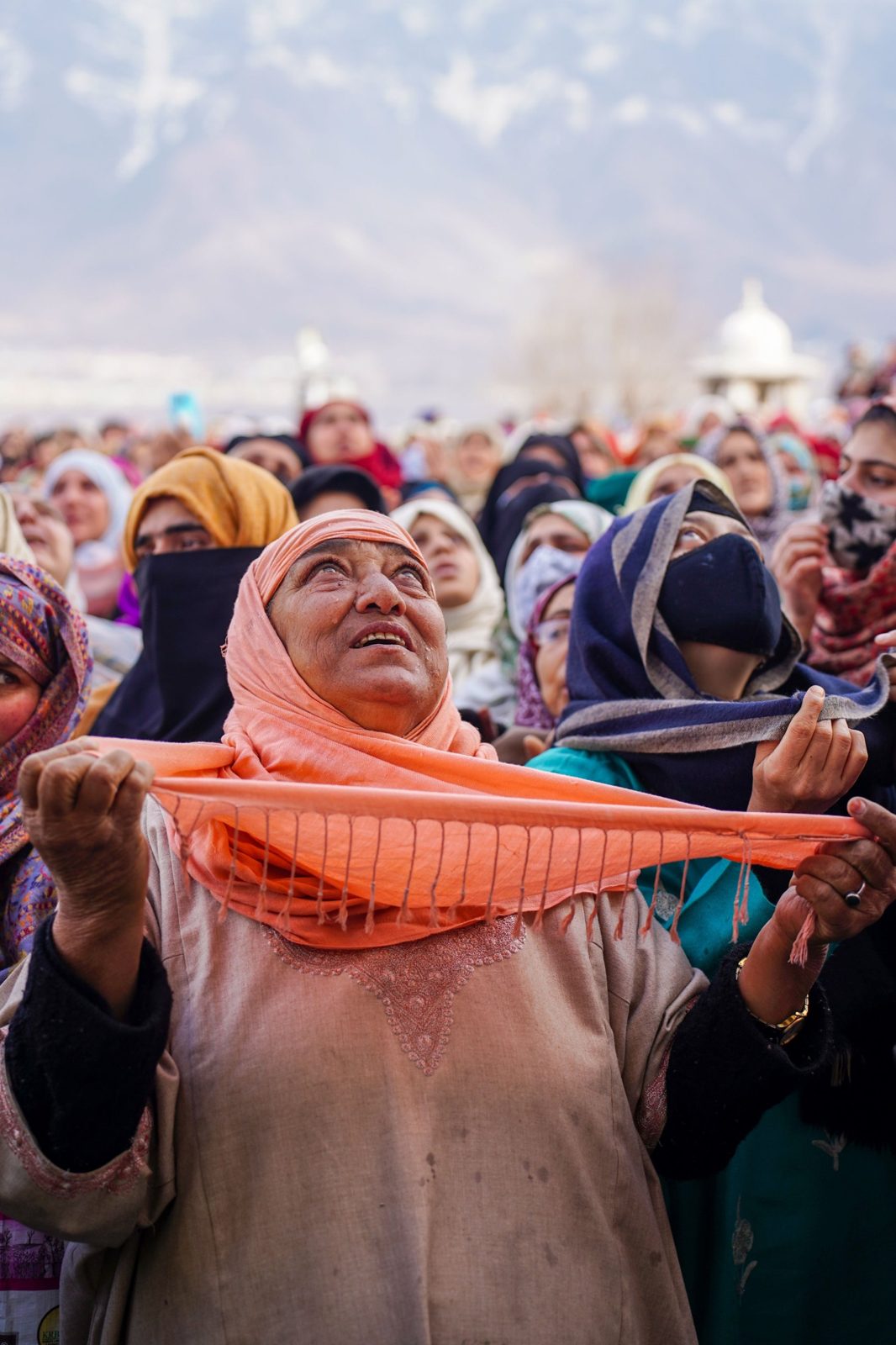
Islam reached Kashmir not by conquest but by preaching. Bulbul Shah converted the Ladakhi prince Rinchan in the 1320s, and from 1372 Mir Sayyid Ali Hamadani arrived from Hamadan in Persia with, by tradition, seven hundred followers, many of them craftsmen — which is why Kashmir’s shawl weaving, papier mâché and carpet work date from the same moment as its conversion. The Kashmiri practice is Sunni in the main, strongly Sufi in character, and built around shrines rather than only mosques.
Religion in Jammu and Kashmir
Religion in Jammu and Kashmir
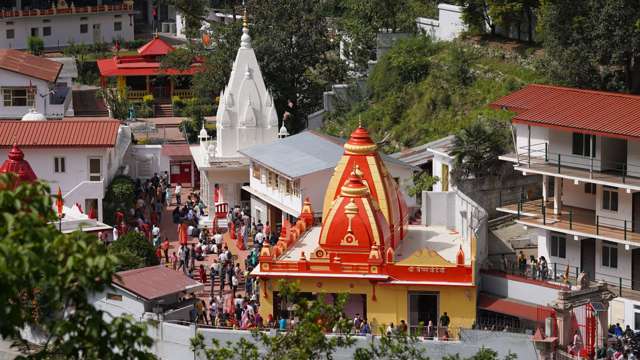
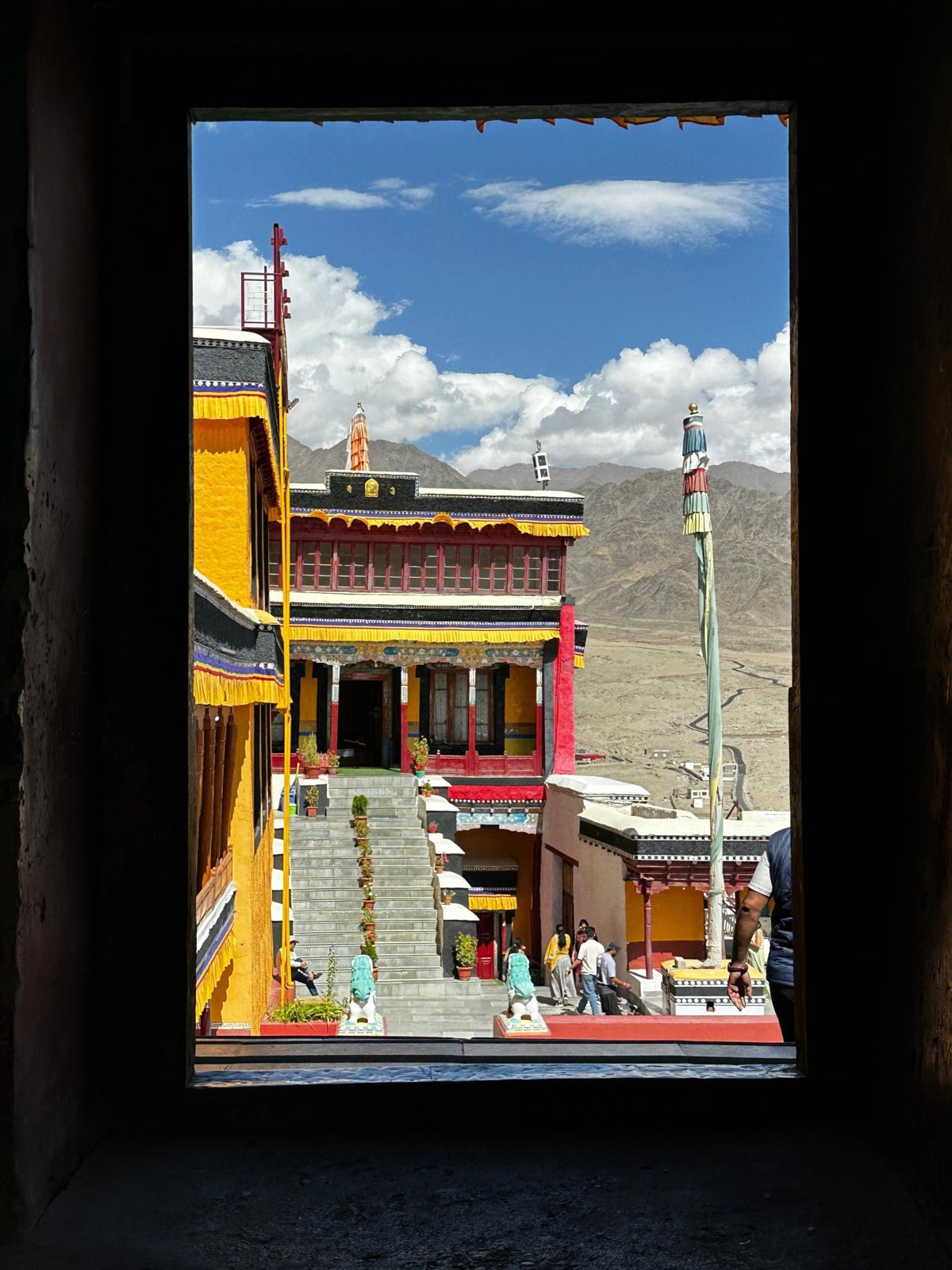
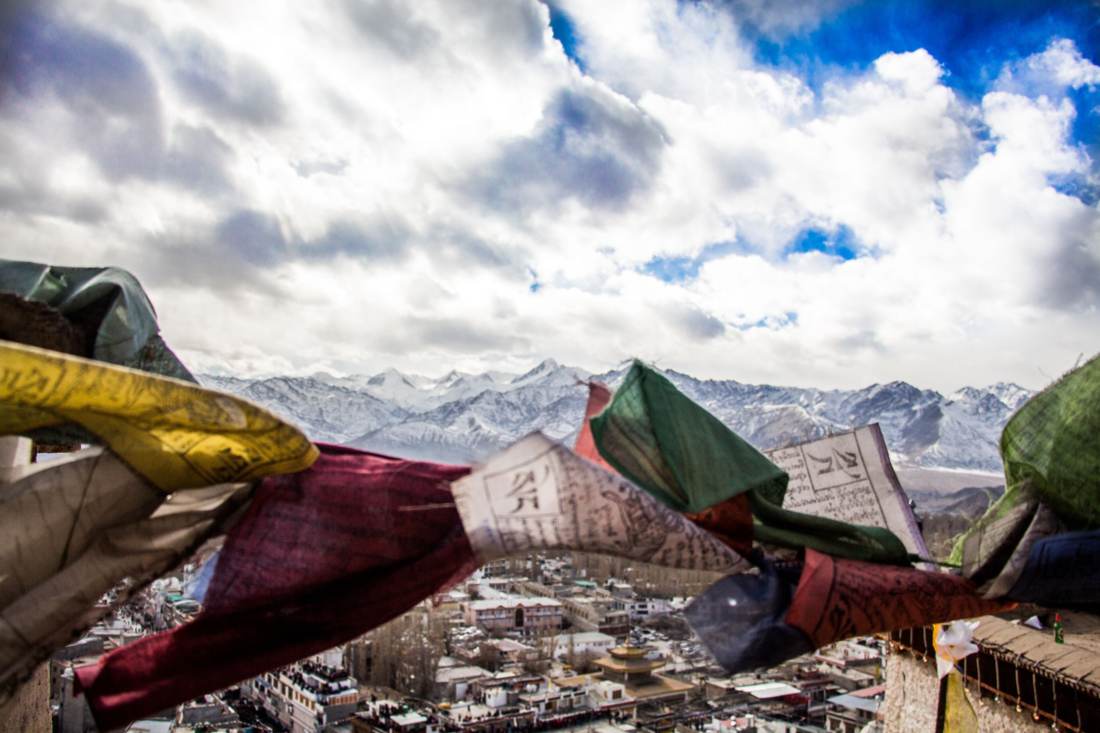
Three regions, three majorities, one administration for most of the last century. Islam is the faith of the Kashmir valley, Hinduism of Jammu, and Buddhism of Leh — and the difference between the three is not only a matter of who prays where. They differ in language, in dress, in food, in architecture and in climate. Travelling from Jammu to Srinagar to Leh is three different countries in one trip, and religion is the clearest line between them.
In the 2011 Census, the undivided state of Jammu and Kashmir was 68.3 per cent Muslim, 28.4 per cent Hindu, 1.9 per cent Sikh and 0.9 per cent Buddhist. Those shares look very different once you break them up: the Kashmir valley is around 96 per cent Muslim, Jammu division around 62 per cent Hindu and 34 per cent Muslim, and Ladakh is split almost in half, with Leh district two-thirds Buddhist and Kargil district Muslim-majority and mostly Shia.
For a visitor the useful point is that none of these places is closed to you. Shrines, temples and monasteries here are working places of worship rather than monuments, people are used to outsiders at them, and in most cases you are welcome to go in if you are dressed properly and behave the way everyone else is behaving.
Jammu and Kashmir68.3% Muslim (2011)
The valleyAbout 96% Muslim
Jammu divisionAbout 62% Hindu
Leh district66% Buddhist
What binds itKashmiriyat
The faiths
Three regions, three majorities
The one thing most accounts of Kashmiri Islam get wrong is calling it simply imported Persian Sufism. The order that actually shaped the valley, the Rishi order, began here: Sheikh Noor-ud-din Noorani, known to Kashmiris as Nund Rishi and to Hindus as Sahazānand, took the vegetarian, cave-dwelling, ascetic habits of the Shaivite tradition and carried them into Islam. His verses are quoted by both communities. His shrine at Charar-i-Sharief is the second most visited in Kashmir.
Jammu is called the city of temples and it earns the name: Raghunath Temple alone holds seven shrines in one complex. The largest pilgrimage in the region, and one of the largest in India, is Vaishno Devi at Katra in Reasi district, which draws several million people a year up a twelve-kilometre climb to a cave. Jammu division is also where most of the region’s Dogra culture, language and temple architecture belongs.
Ladakh keeps a form of Tibetan Buddhism that in some respects survived better here than in Tibet. The gompas — Hemis, Thiksey, Diskit, Lamayuru, Alchi — are monasteries, schools and landlords at once, and several are a thousand years old. Bodhisattvas are venerated alongside the Buddha, the Dalai Lama is the spiritual head, and the festival calendar runs on the Tibetan lunar year, which is why monastery festival dates move from one year to the next.
The map is not tidy, and the tidy version is the wrong one. Around 1.9 per cent of the region is Sikh, with Gurdwara Chatti Patshahi in Srinagar marking a visit by Guru Hargobind. Hindu Kashmiri Pandits remain in the valley, and the valley holds major Hindu sites — Kheer Bhawani at Tulmulla, the Shankaracharya temple above Srinagar, the ruined Martand sun temple, and Amarnath itself. Kargil in Ladakh is Muslim. Poonch and Rajouri in Jammu division are Muslim-majority.
Where to go
Shrines, temples and monasteries worth the detour
All of these are working places of worship, not museums, and all of them take visitors. We can build any of them into a trip.
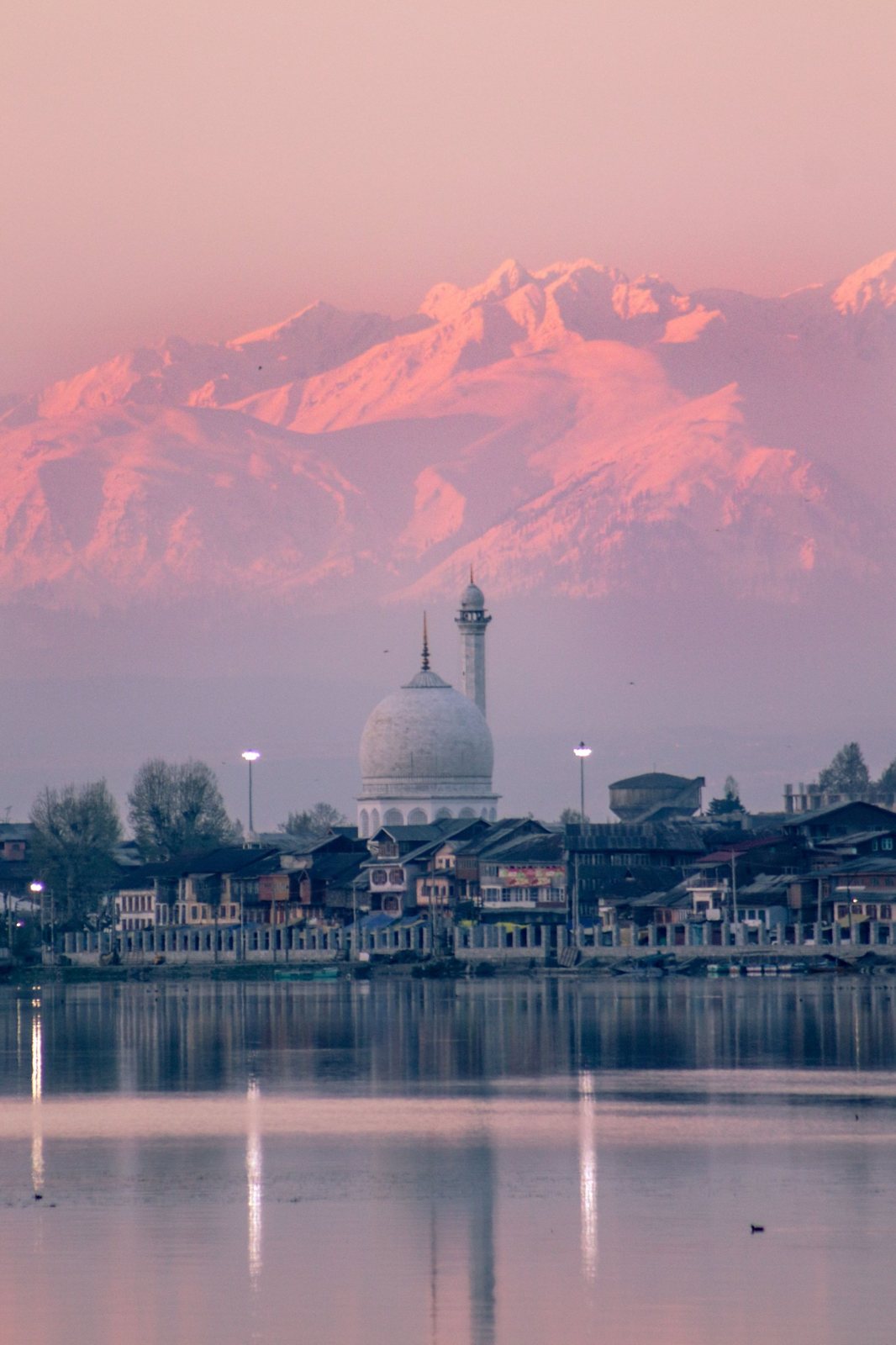
Hazratbal, Srinagar
The white marble shrine on the western shore of the Dal, and the most important Muslim shrine in Kashmir. It holds the Moi-e-Muqaddas, believed to be a hair of the Prophet, which is shown to the public on a handful of days in the year. Fridays are crowded. The setting, with the lake in front and the Zabarwan behind, is the best of any shrine in the valley.
Charar-i-Sharief
Thirty kilometres south-west of Srinagar, the shrine of Sheikh Noor-ud-din, the valley’s own saint. The original wooden shrine burned down in 1995 and has been rebuilt. Visited by Muslims and by Hindus, which is the point of it.
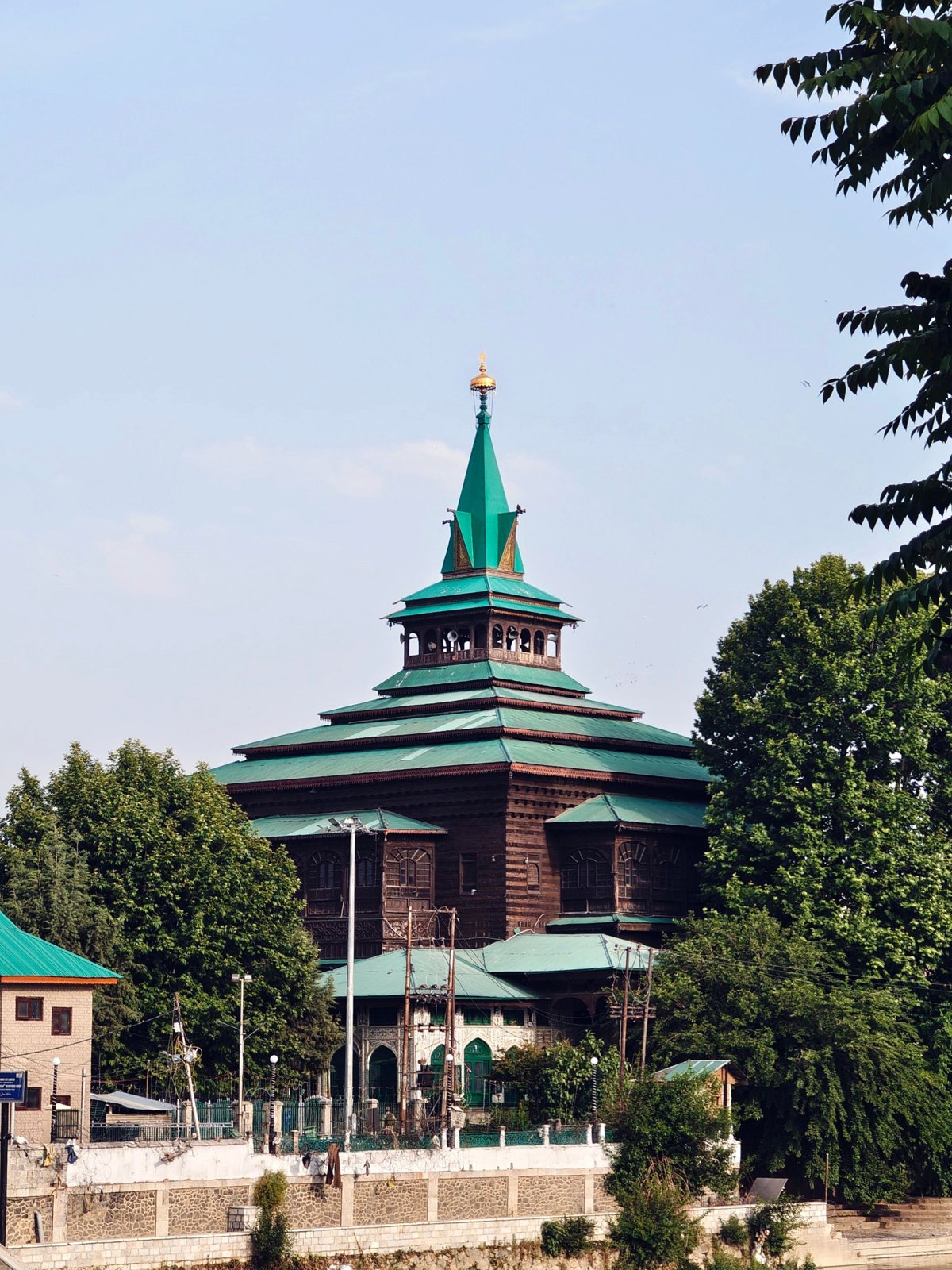
Khanqah-e-Moula
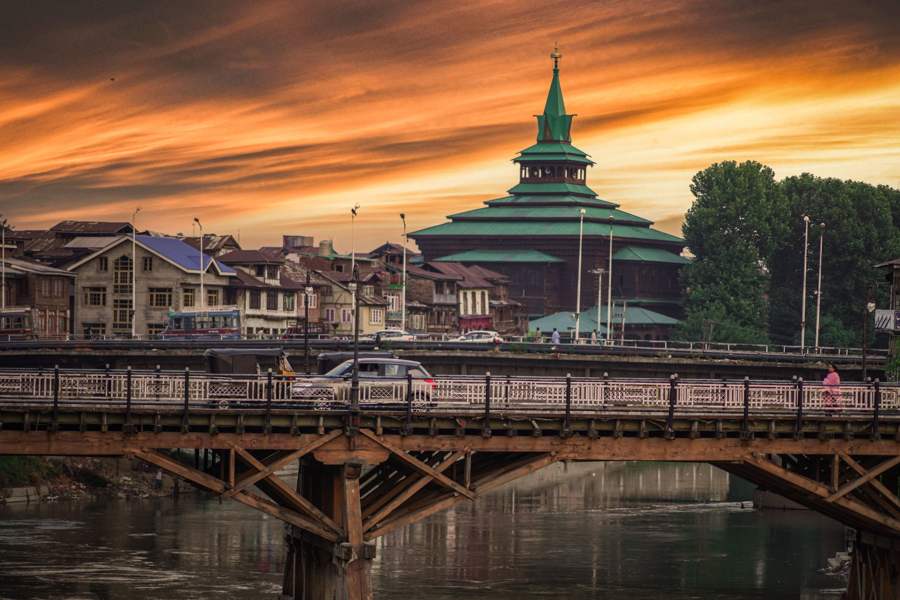
On the bank of the Jhelum in old Srinagar, built in 1395 on the site where Mir Sayyid Ali Hamadani prayed. It is the oldest Muslim building in Kashmir, made of wood without nails, with painted and carved interiors. Non-Muslims may look from the veranda.
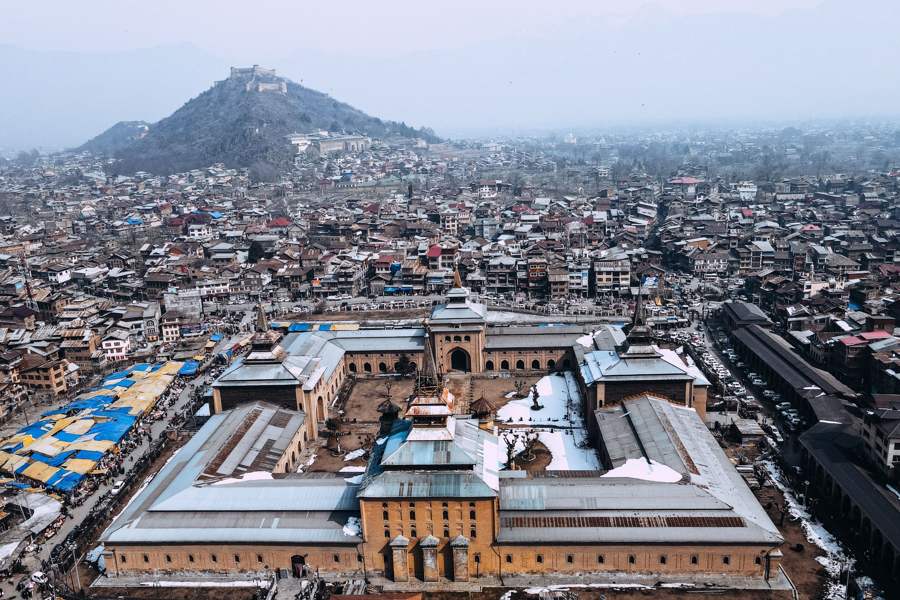
Makhdoom Sahib
On the slope of Hari Parbat above the old city, the shrine of Hamza Makhdoom. A climb of steps, a view over the whole of Srinagar, and the Mughal fort and a Hindu temple and a gurdwara all on the same hill.
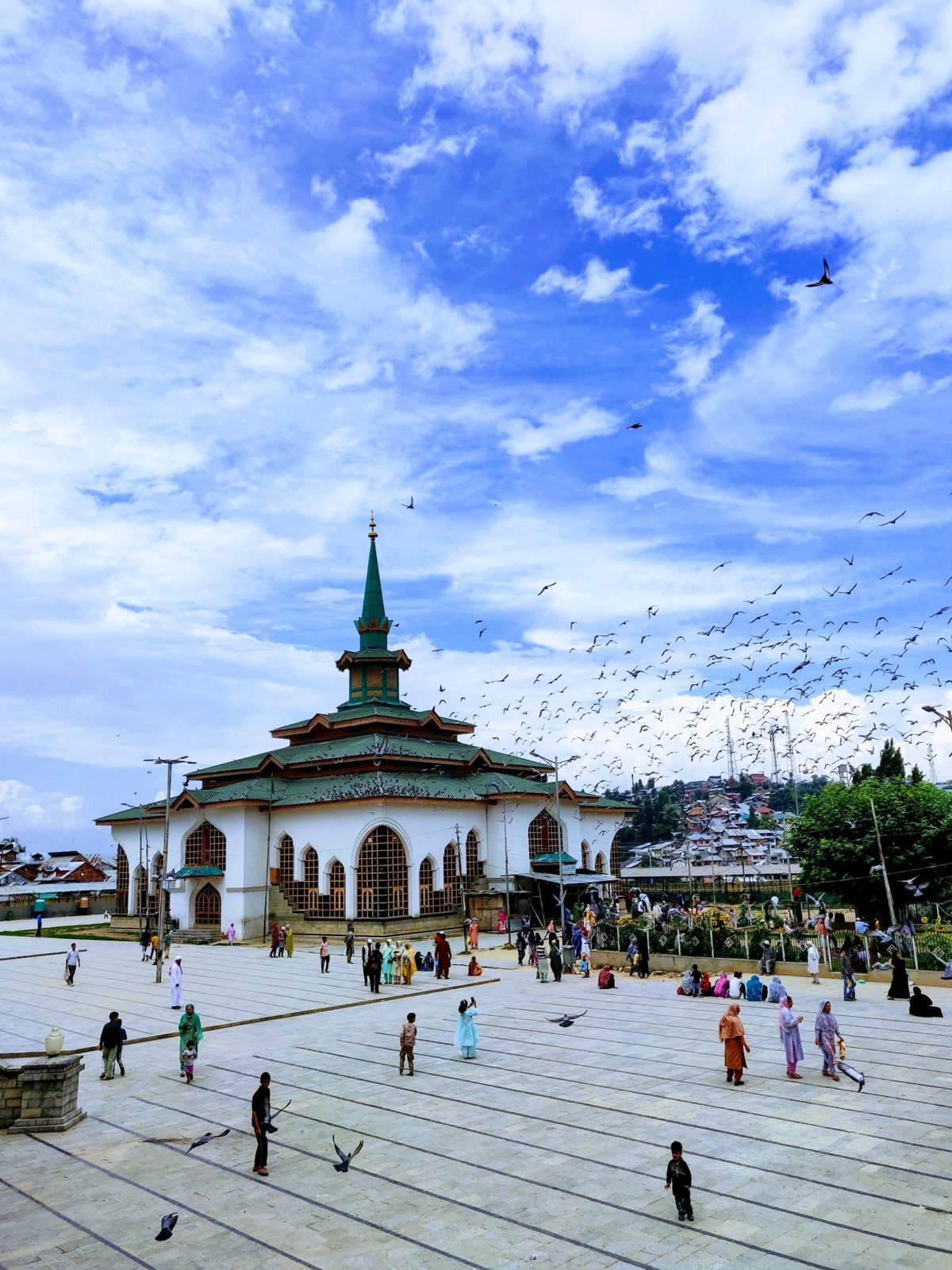
Dastgeer Sahib, Khanyar
A shrine to the twelfth-century Baghdad saint Abdul Qadir Jeelani, in the thick of the old city. It burned in 2012 and has been rebuilt in the same style. Worth seeing for the painted woodwork.
Kheer Bhawani, Tulmulla
The most important Hindu shrine in the valley, 25 km from Srinagar, built over a spring whose water is said to change colour. Its annual mela brings Kashmiri Pandits back to the valley, and Muslim neighbours have historically helped run it.
Raghunath Temple and Vaishno Devi
Raghunath sits in the middle of Jammu city, a complex of seven shrines with one of the largest collections of Sanskrit manuscripts in north India. Vaishno Devi is 50 km away at Katra: a 12 km walk up, open through the night, several million pilgrims a year.
Hemis, Thiksey and Diskit
The three gompas most visitors see. Hemis is the richest in Ladakh and holds the Hemis festival in June or July; Thiksey is the one that looks like a small Potala above the Indus valley; Diskit in Nubra has the thirty-two-metre Maitreya Buddha facing the Shyok.
What binds it
Kashmiriyat, honestly
Kashmiriyat is the word Kashmiris use for what the valley had before the last four decades: a shared culture in which the religious line mattered less than the regional one. It was never a theory. It showed up in practice — in Muslims attending the Kheer Bhawani mela, in Hindus visiting Sufi shrines, in the fact that Nund Rishi is quoted comfortably by both, in shared saints, shared food, shared language and a shared contempt for outsiders explaining Kashmir to Kashmiris.
It would be dishonest to write about it only in the present tense. The exodus of the Kashmiri Pandits from the valley in 1990 tore a large piece out of it, and nobody here pretends otherwise. What remains is real, though: the shrines are still shared in places, the Kheer Bhawani mela still runs, and the courtesy you will be shown at a shrine as an obvious outsider comes out of the same tradition.
As a visitor you do not have to take a position on any of this, and you will be doing everyone a favour if you do not. Go, look, ask questions of the person in front of you rather than about them, and take what you are told.
Before you go in
How to visit without getting it wrong
None of this is complicated, and nobody expects a visitor to know it already. Getting it right takes two minutes and changes how you are received.
Shoulders and knees covered at any shrine, temple or gompa, men included. Women should carry a scarf for the head at Muslim shrines and at some temples; one is often available at the door if you have not got one.
Shoes come off before you enter anywhere. There is a stand or a man who looks after them; a small note is normal. Socks are fine, and in January they are advisable.
At most Muslim shrines there are separate sections for men and women, and at a few the innermost chamber is for Muslims only. Nobody minds the question. At gompas, walk clockwise around the chorten and the prayer wheels, and do not sit with your feet pointing at an image.
The buildings and courtyards are fine. People at prayer are not, unless you have asked them. Inside a gompa, flash damages old wall paintings and is usually banned outright.
Friday afternoon at a big Muslim shrine is the busiest hour of the week and not the time for a first visit. Ramzan changes opening hours everywhere. Monastery festivals follow the Tibetan lunar calendar, so the dates move each year — ask us before you fix the trip around one.
FAQ
Religion in Jammu and Kashmir: questions and answers
What is the main religion of Jammu and Kashmir?
Islam. In the 2011 Census the undivided state was 68.3 per cent Muslim, 28.4 per cent Hindu, 1.9 per cent Sikh and 0.9 per cent Buddhist. The majority differs by region: the Kashmir valley is about 96 per cent Muslim, Jammu division about 62 per cent Hindu, and Leh district in Ladakh about 66 per cent Buddhist.
Can non-Muslims visit Muslim shrines in Kashmir?
Yes, at nearly all of them, and visitors are common. Dress modestly, take your shoes off, and follow the separate entrances for men and women where they exist. At one or two shrines the innermost chamber is reserved for Muslims; you can see everything else. Nobody will mind you asking at the door.
Can we visit Buddhist monasteries in Ladakh?
Yes. Almost every gompa is open to visitors, usually for a small entry fee that goes to its upkeep. Walk clockwise, do not point your feet at an image, and do not use flash inside: it damages wall paintings that are centuries old.
What is Kashmiriyat?
The Kashmiri word for the valley’s shared culture, in which regional identity has historically counted for more than religious difference — shared shrines, shared saints, shared language and food across Muslim and Hindu Kashmiris. It was badly damaged by the events of 1990, but it is still the frame in which Kashmiris describe themselves.
Is it safe to travel between Jammu, Kashmir and Ladakh?
Yes, and tens of thousands of people do it every summer. The practical constraints are roads and weather rather than anything else: the Srinagar–Leh highway is open roughly June to October, Ladakh is a summer destination, and the Jammu–Srinagar highway can close in heavy snow or rain. We plan trips around that and will tell you honestly if a date does not work.
Can you build a trip around the shrines and monasteries?
Yes. A pilgrimage-focused trip is one of the things we are asked for most often, whether that is the Sufi shrines of the valley, Vaishno Devi and the Jammu temples, the Ladakh gompas, or Amarnath in season. Tell us which tradition matters to you and how many days you have.
Questions and answers
Ask a question about visiting shrines and temples
Book this tour
Ask for a free quote
Tell us what you would like to see, your dates and how many people are coming. Our team replies on WhatsApp or e-mail with the plan and the final price.
- No advance payment to ask
- Every plan can be changed
- Call or WhatsApp +91 9906 00 11 22
- Email info@kashmirtravels.com
Read next
More about Kashmir
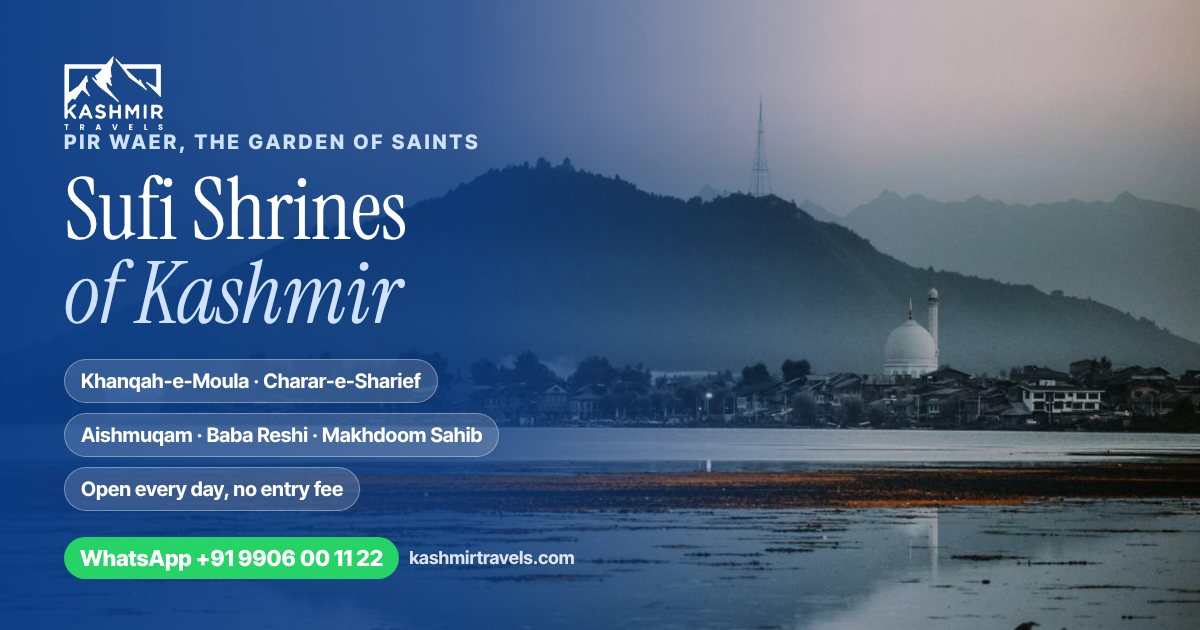
🕌Sufi Shrines of Kashmir
Every major shrine in the valley, and what is in it.
Read more →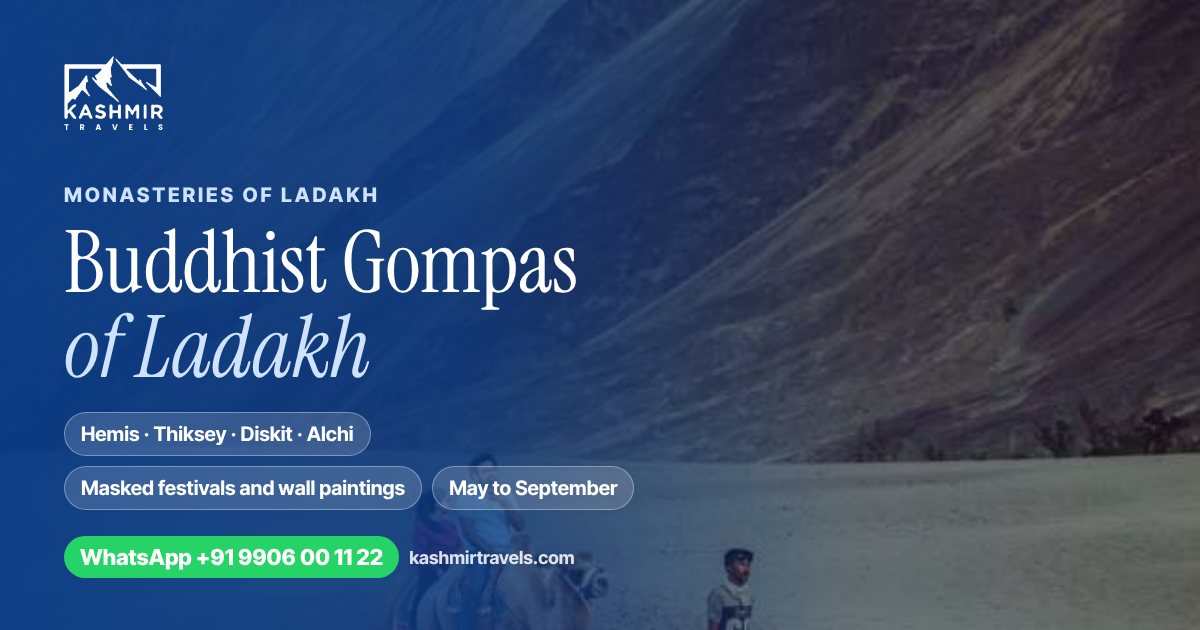
☸️Buddhist Gompas of Ladakh
Hemis, Thiksey, Diskit, Lamayuru and the rest.
Read more →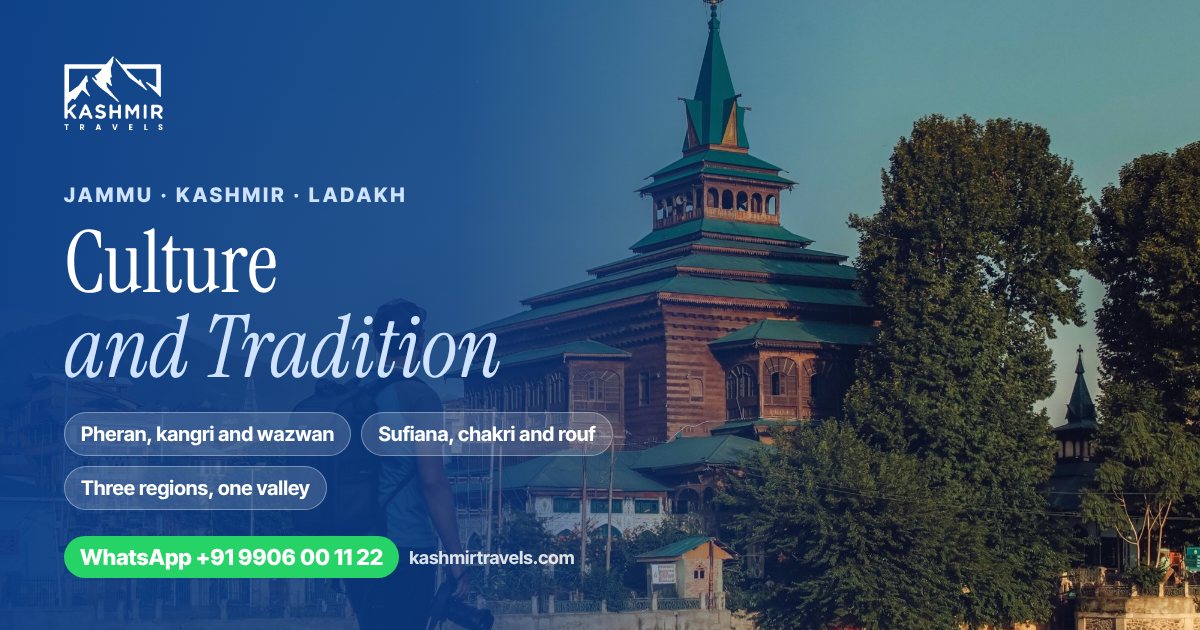
🧵Culture and Tradition
Dress, food, crafts, music and festivals.
Read more →Build the trip around the places that matter to youSufi shrines, the Jammu temples and Vaishno Devi, the Ladakh gompas, or all three in one trip. Tell us which and how many days you have.
Ask us →