Family-run since the 1960s · Srinagar, KashmirCall or WhatsApp 24/7: +91 9906 00 11 22
Kashmir · Pir Waer

Sufi Shrines of Kashmir

Pir Waerthe garden of saints
Freeopen every day
Old cityfour shrines in one morning
Ursthe night fairs
Kashmir · Pir Waer

Sufi Shrines of Kashmir: Pir Waer, the garden of saints

The shrines at a glance

🕌Pir Waer

So many shrines that Kashmir is called Pir Waer, the garden of saints.

📜Shah-i-Hamadan

Mir Sayyid Ali Hamadani came with seven hundred followers and changed the valley for ever.

⛰️Built on hills

Most shrines stand where the saints meditated or lie buried, which is why so many are on hills.

🤝Open to all

Although the saints were Muslim, people of every religion come to the shrines with their wishes.

🪵Wood and carving

Deodar beams, papier-mâché ceilings and khatamband work, some of it centuries old.

🏘️In every village

There is a shrine, big or small, in almost every village and town of the valley.

🔥Urs and Zool

Each shrine has its own urs, and Aishmuqam has the Zool, the festival of torches.

🧭Easy to reach

Khanqah-e-Moula and Dastgeer Sahib are in the old city; Baba Reshi is on the way to Gulmarg.

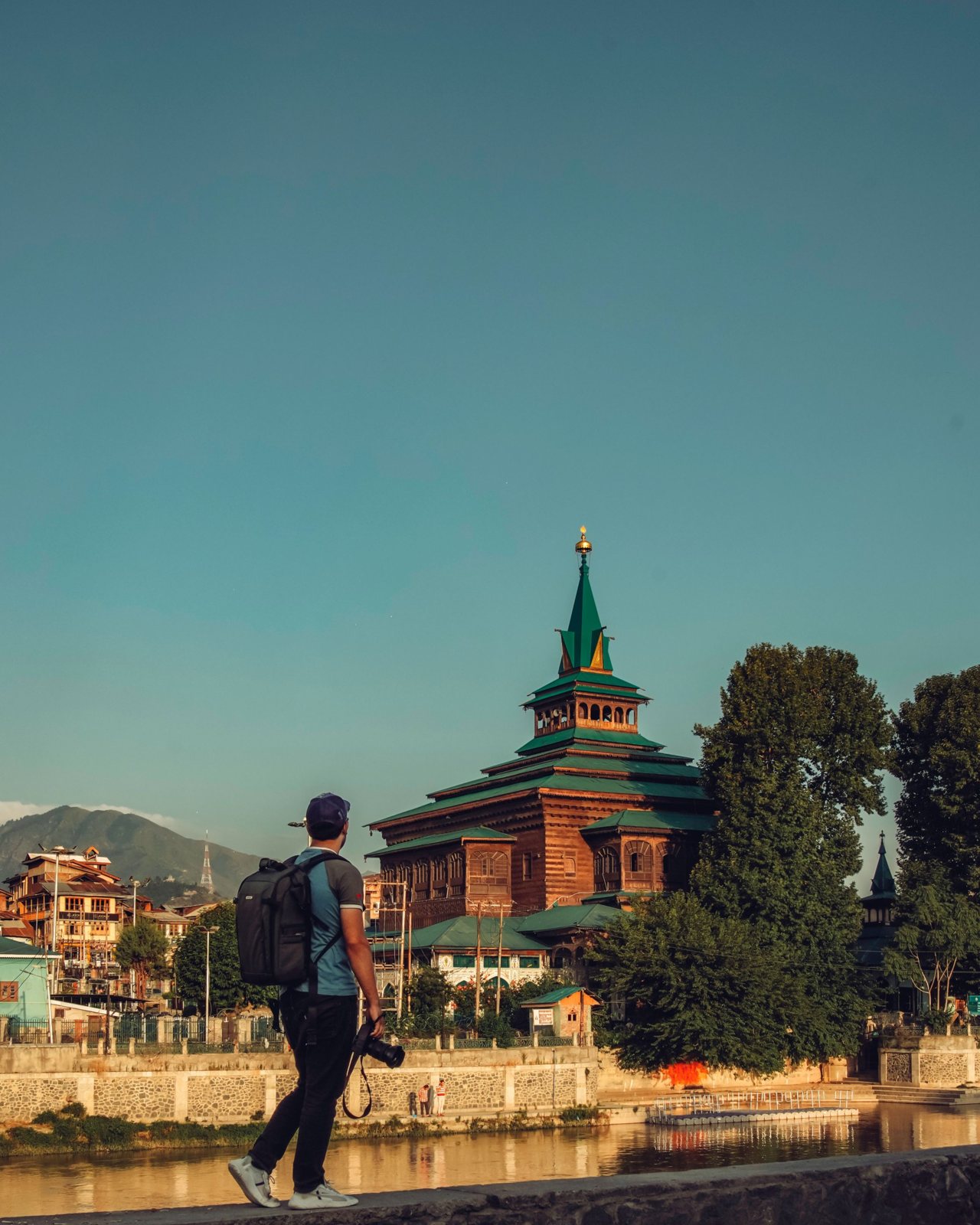
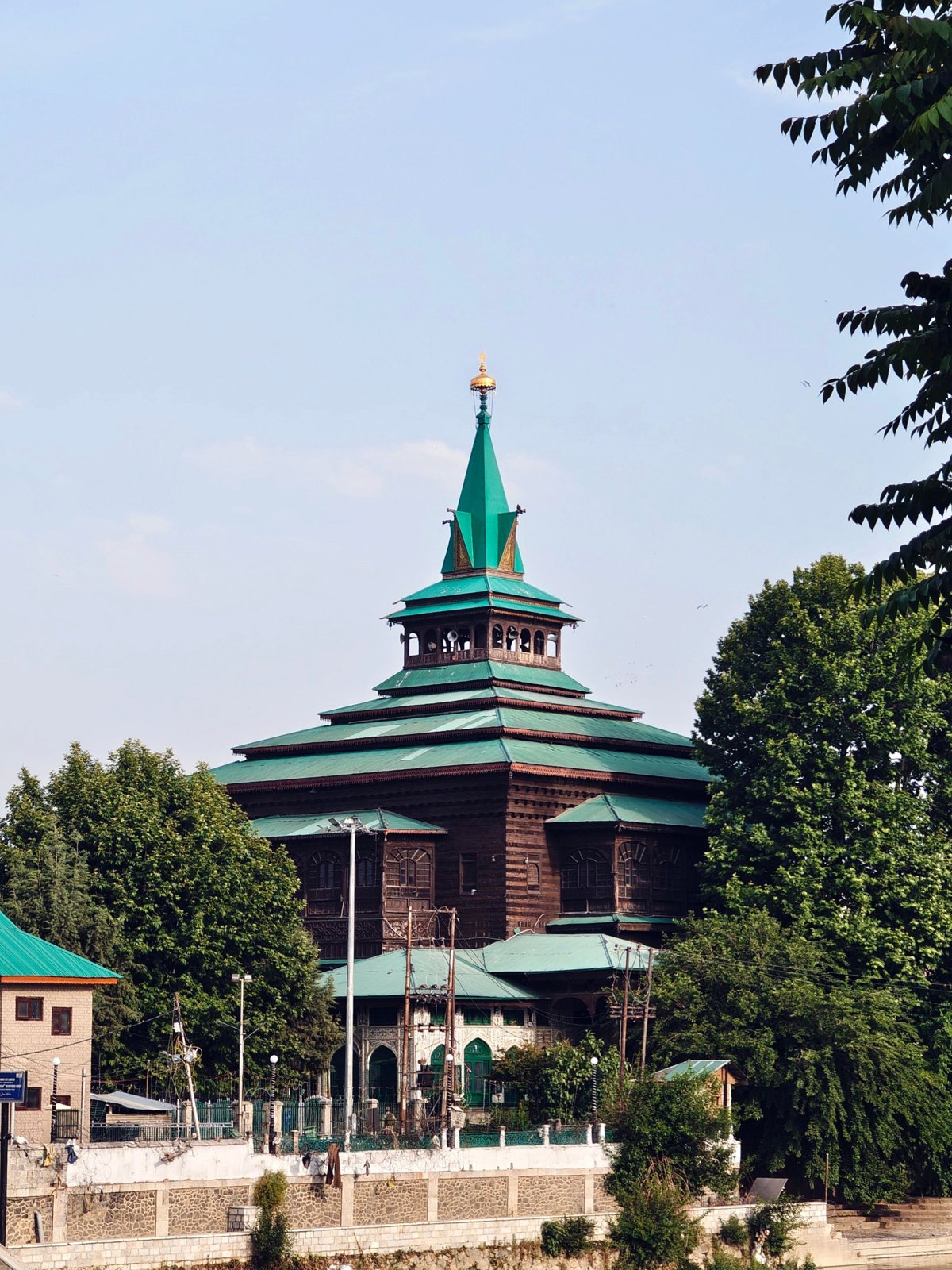
The wooden Khanqah-e-Moula shrine in Srinagar with its green pyramid roofs
Khanqah-e-Moula, Srinagar
The Khanqah-e-Moula seen across the river Jhelum from the bund
Across the Jhelum
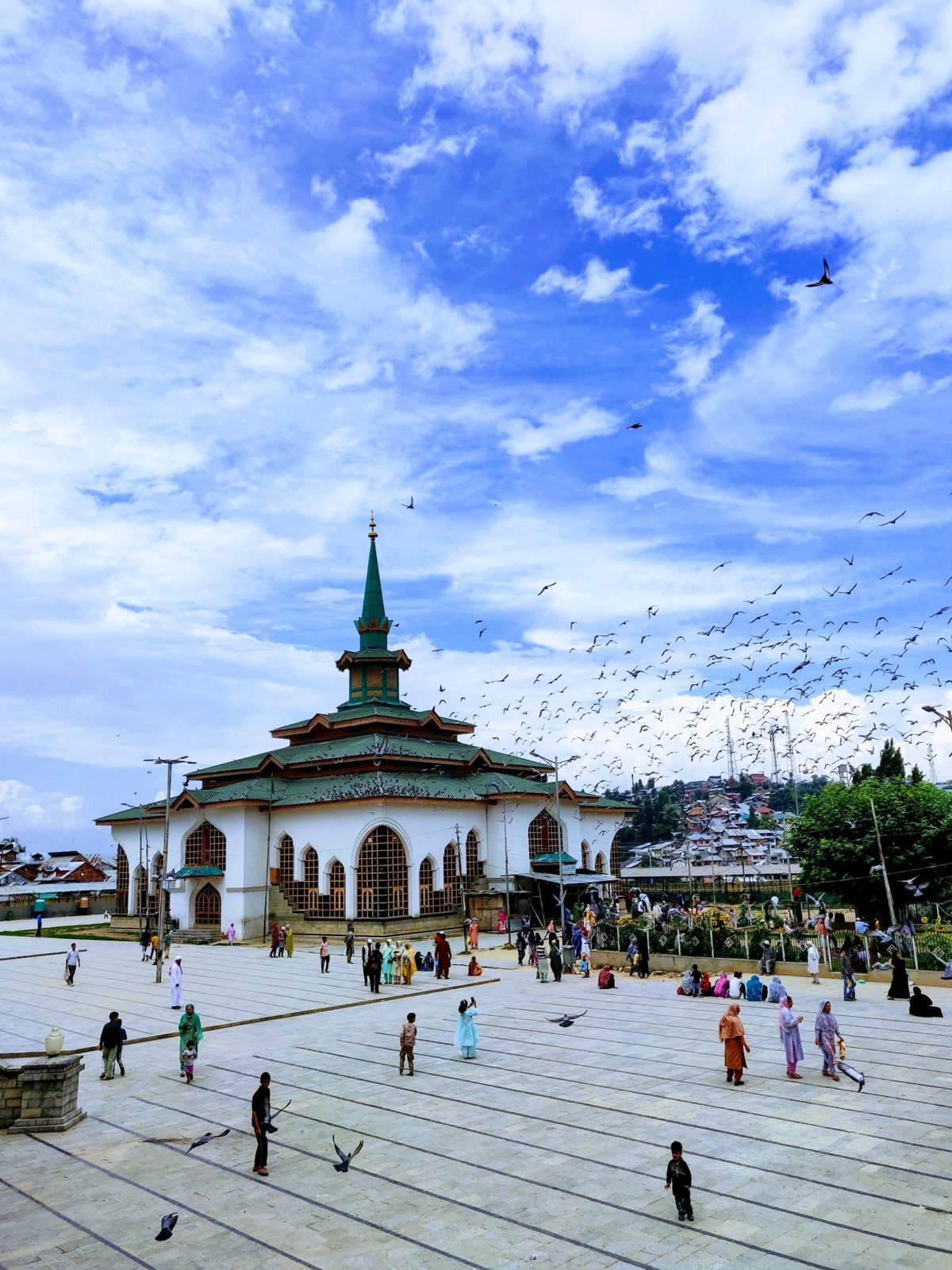
A Kashmiri shrine with a green spire and a courtyard full of pigeons and people
A shrine courtyard
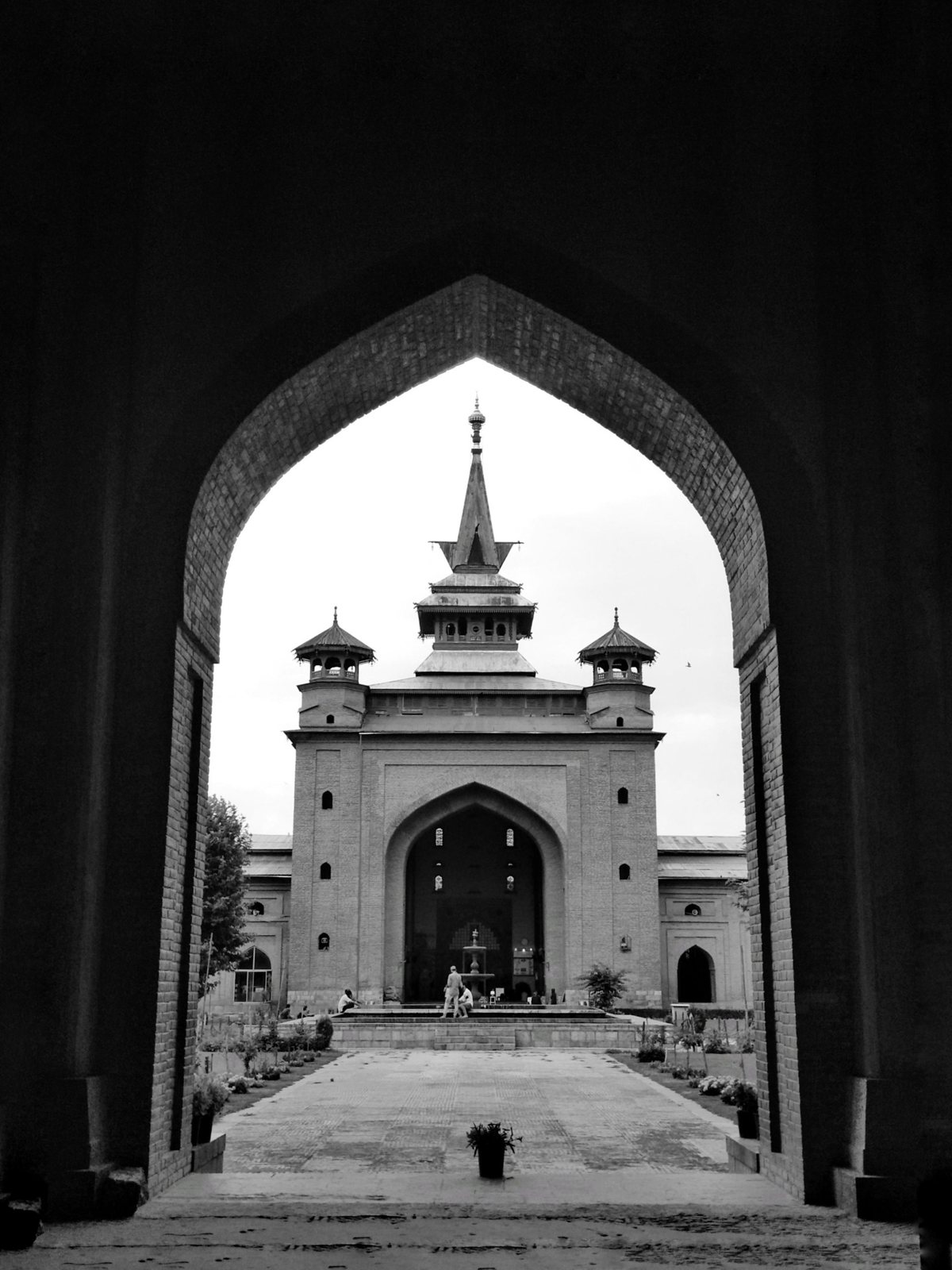
The courtyard and wooden spires of the Jamia Masjid in the old city of Srinagar
Jamia Masjid, Nowhatta
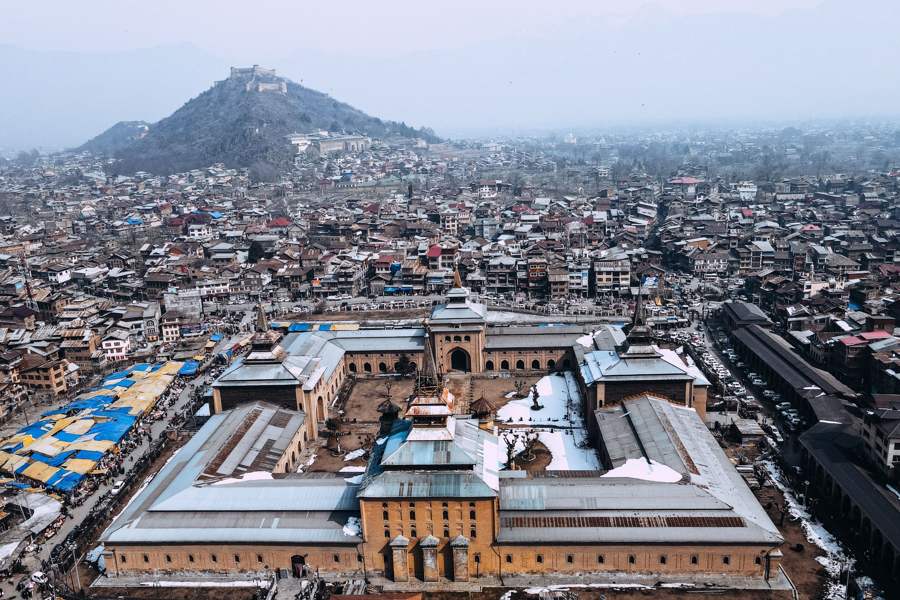
The old city of Srinagar with Hari Parbat behind it
The old city and Hari Parbat
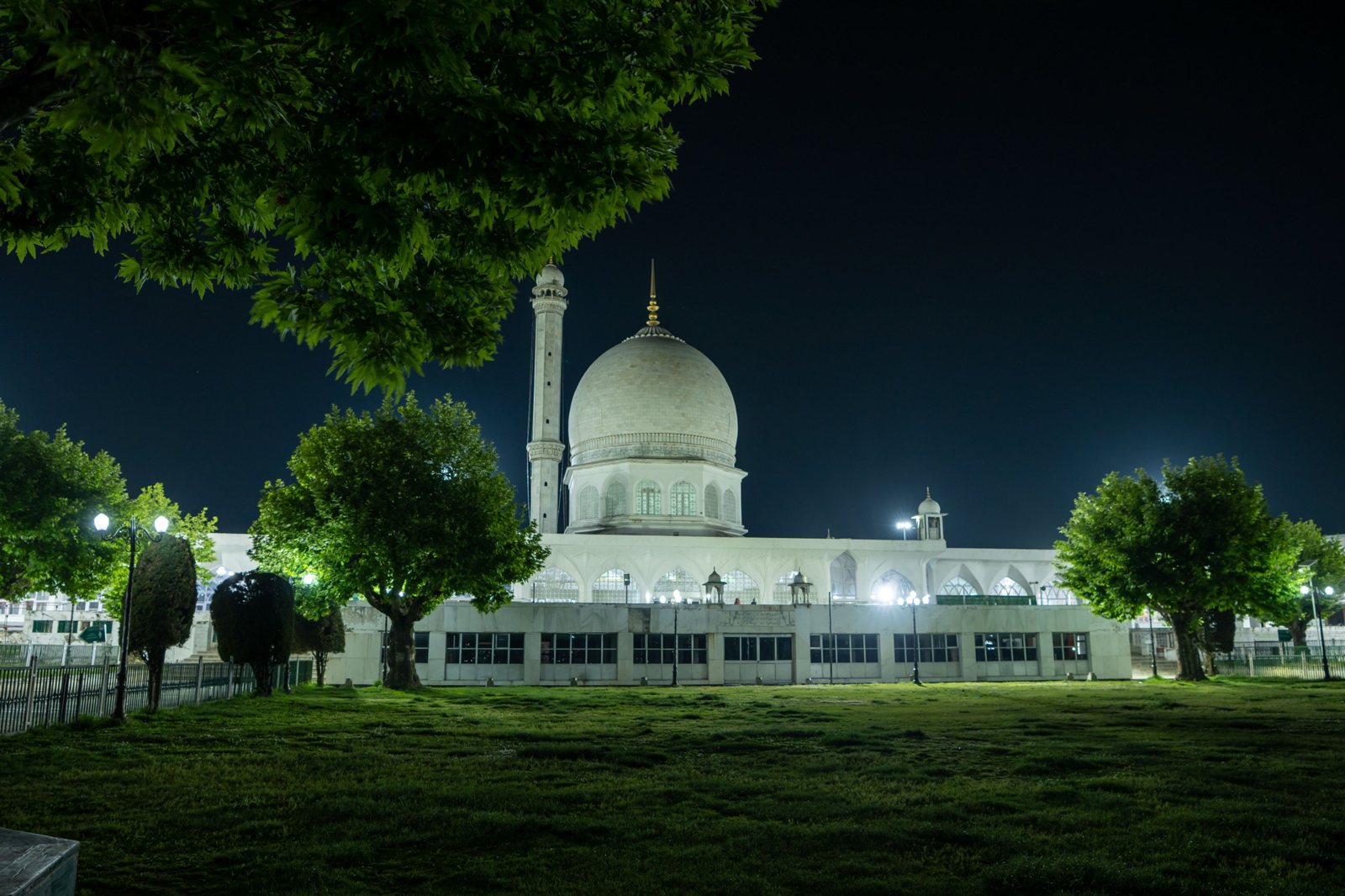
Hazratbal Shrine lit up at night behind the chinar trees
Hazratbal at night
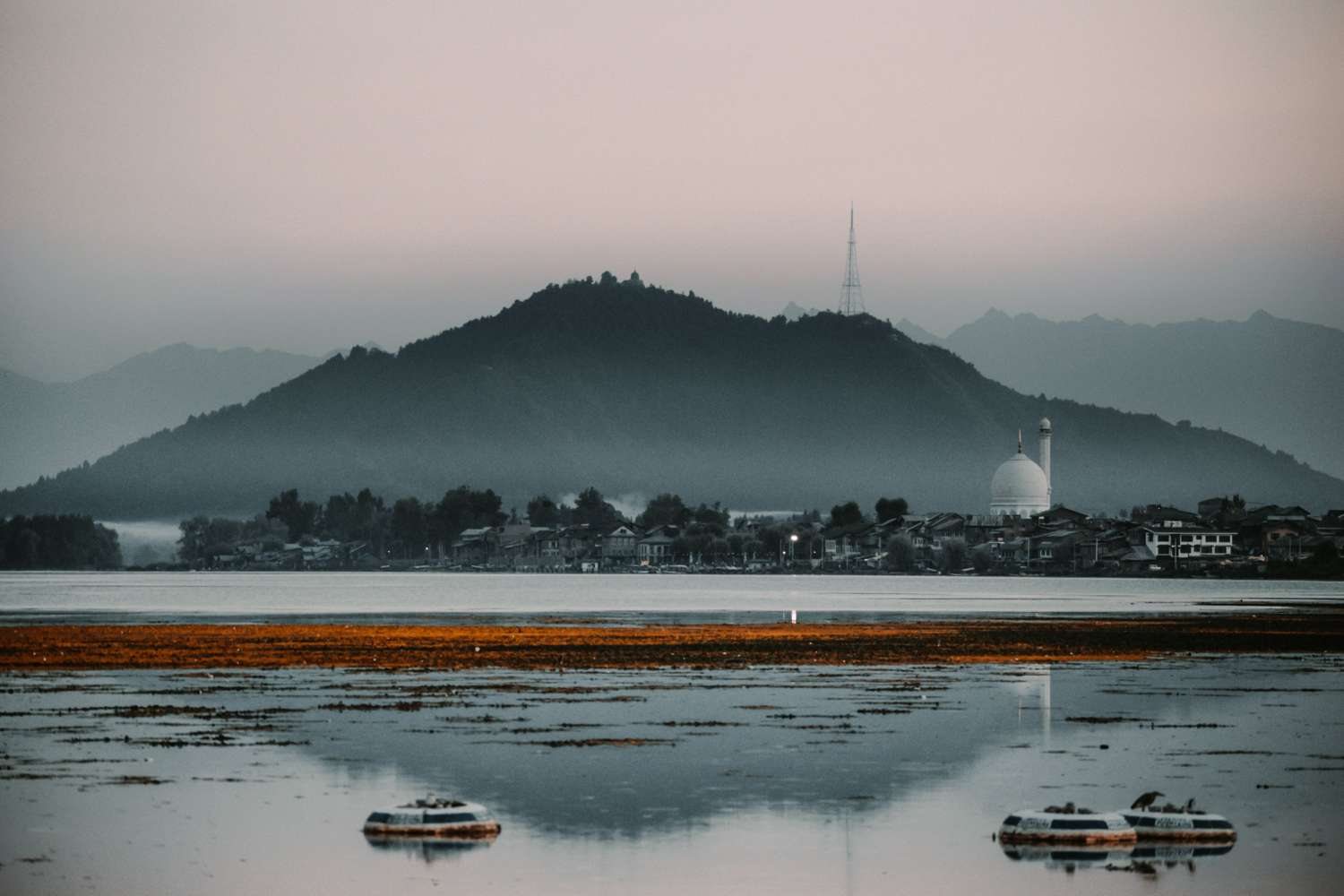
Hazratbal Shrine at dusk beside Dal Lake
Hazratbal at dusk
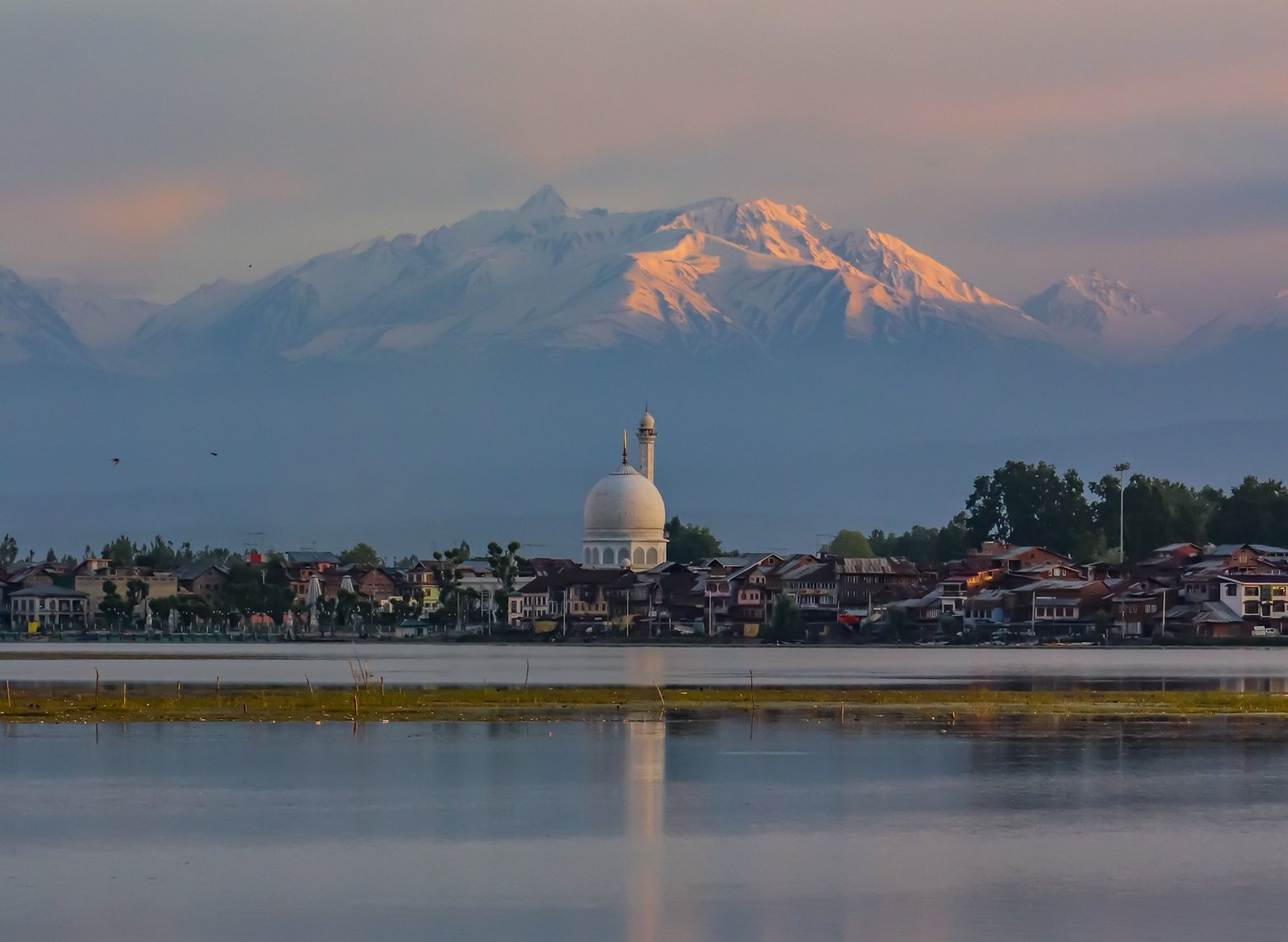
Hazratbal Shrine across Dal Lake at sunrise with snow-covered mountains behind
Dawn over Dal Lake
Overview

About the Sufi shrines of Kashmir

Kashmir is a hub of Sufism. Not many places in the world have had such a large number of Sufi saints as Kashmir has. The Sufi saints who came here from the Middle East with the message of Islam are revered by all the people of Jammu and Kashmir, whatever their religion. It is this love for the saints that led people to build great artistic shrines dedicated to them, and the shrines have become important religious and festival centres across the whole region.

Kashmir is the land of Sufi saints. The first Sufi saint to come to Kashmir with the message of Islam was Mir Sayyid Ali Hamadani, popularly known as Shah-i-Hamadan. He came with seven hundred followers. They settled in various parts of Kashmir, spread the message and played a great part in the conversion of the local population to Islam. The people of Jammu and Kashmir built shrines at various places dedicated to the Sufis of Kashmir. The shrines were built where the Sufis used to meditate and where they lie buried, which is the reason that most of them are on hills: the hills were isolated, and so a perfect place for worship and meditation.

Although the saints were Muslim and came with the intention of bringing the message of Islam, they are equally revered by people of other religions in and outside Kashmir. People of all religions come to these places with their whims, wishes and desires.

The Sufi shrines of Kashmir are a great architectural treasure, and some of them are centuries old. Kashmiris pour all their love and devotion into maintaining and beautifying them. These beautiful shrines have earned Kashmir the name of Pir Waer, the garden of saints. There is a shrine, big or small, in almost every village and town of the valley, and they are not restricted to the valley: they are found in all three regions. All the shrines have a blissful air, so much so that one feels very close to the Almighty inside them.

The wooden Khanqah-e-Moula shrine in Srinagar with its green pyramid roofs and spire
Khanqah-e-Moula, Srinagar
The best known shrines

The best known are Aishmuqam, dedicated to Baba Zain-ud-Din Wali; Baba Reshi near Gulmarg; Charar-e-Sharief, dedicated to Sheikh Noor-ud-Din Noorani; Makhdoom Sahib; Dastgeer Sahib, dedicated to Syed Abdul Qadir Jeelani; and the Khanqah-e-Moula in Srinagar, dedicated to Shah-i-Hamadan. We can build a day or two around any of them.

The buildings

Wood, not marble

The Kashmiri shrine is built of deodar and brick rather than marble. A square hall carries a pyramid of roofs one above the other, ending in an open wooden pavilion and a tall spire; the walls are panelled in carved wood, and the ceilings are worked in khatamband, small pieces of wood fitted together without a single nail, or painted in papier-mâché.

Inside, the saint’s grave stands behind a carved screen, hung with embroidered cloth, and the air smells of attar and old timber. Pigeons are fed in the courtyard, and salt tea and bread are given out at the gate. This style grew up in the valley alone, and it is the reason the shrines look like no mosque anywhere else in the Muslim world.

The festivals

Urs nights and the Zool

Every shrine keeps the urs, the anniversary of the saint’s death, with night-long prayers and a fair outside. The dates follow the Islamic calendar, so they move each year.

At Aishmuqam the Zool is held in spring, when people climb the hill carrying lit torches of birch bark in a long line after dark. Friday is the busiest day of the week at every shrine, and in the month of Ramzan the courtyards stay full late into the night.

For travellers

The two easiest to reach

The cave shrine at Aishmuqam is popular with visitors because of its position and because it sits on the Srinagar–Pahalgam road, easy to stop at on the way. The other favourite is Baba Reshi, near Gulmarg. Both can be added to a day you are already spending on the road, and neither takes more than half an hour to see.

Please remember

How to visit a shrine

  • Cover your head. Women wear a scarf, and scarves are usually kept at the door for anyone who has none.
  • Take your shoes off at the entrance. There is always a rack or a man who looks after them.
  • Dress modestly, with shoulders and knees covered.
  • At some shrines women pray in a separate area and do not enter the inner chamber. Follow what the women around you are doing.
  • Do not photograph people at prayer, and put the camera away inside the inner chamber.
  • There is no entry fee anywhere. If you want to give something, there is a box inside.
  • Friday afternoon and the urs days are the most crowded hours of the year. Go on another day if you want the place quiet.
When to go

When to go

The shrines are open all year and cost nothing to enter. Spring and autumn are the pleasantest months in the valley, and the light on the old wood is best in the late afternoon. Fridays and the urs nights are the fullest; a weekday morning is the quietest. Baba Reshi and Charar-e-Sharief are also beautiful under snow in winter, when the roads to them stay open.

🌸April to June, September and October

Mild weather for walking the old city, with Charar-e-Sharief and Aishmuqam easy to add to a drive.

🕯️Urs nights and the Zool

If your dates fall on one, go. The shrines are lit, the courtyards are full, and there is nothing else like it in the valley.

Where to go

The shrines of Kashmir

Shrines stand in every corner of the valley, from the heart of the old city of Srinagar to a hill above Gulmarg. These are the ones most travellers see, with the drive from Srinagar.

01

Khanqah-e-Moula, Srinagar

On the bank of the Jhelum in the old city, built in 1395 in memory of Mir Sayyid Ali Hamadani, Shah-i-Hamadan. It is the oldest Muslim place of worship in Kashmir and the finest piece of wooden architecture in the valley, with papier-mâché ceilings and carved panels. Non-Muslims may see it from the outside and from the doorway.

02

Dastgeer Sahib, Khanyar

In the old city, dedicated to Syed Abdul Qadir Jeelani. The old building burned down in 2012 and has been rebuilt in the same style, in wood and plaster, and the relics kept there were saved.

03

Makhdoom Sahib, Hari Parbat

On the slope of Hari Parbat below the fort, the shrine of Hazrat Sheikh Hamza Makhdoom. A climb of steps brings you to a terrace with the whole of Srinagar and Dal Lake in front of you. Women pray in a separate area outside the inner chamber.

04

Charar-e-Sharief, 30 km from Srinagar

In Budgam, the shrine of Sheikh Noor-ud-Din Noorani, Nund Reshi, called Alamdar-e-Kashmir, the flag-bearer of Kashmir, and revered by Hindus as Nund Rishi. The old wooden shrine was destroyed by fire in 1995 and has been rebuilt. About an hour from the city.

05

Aishmuqam, on the Pahalgam road

A cave shrine on a rock above Aishmuqam village, dedicated to Baba Zain-ud-Din Wali, a disciple of Nund Reshi. A flight of steps leads up to the cave. The Zool, the torch festival, is held here in spring. Easy to stop at on the way to Pahalgam.

06

Baba Reshi, near Gulmarg

At about 2,100 m on the road up to Gulmarg, the shrine of Baba Payam-ud-Din Reshi, who died in 1480. Carved wood inside and out, a quiet courtyard, and a view down the valley. Ten minutes off the Gulmarg road.

07

Hazratbal, on Dal Lake

The most revered shrine in Kashmir, where the Moi-e-Muqaddas, the sacred hair of the Prophet (PBUH), is preserved. White marble and the only domed mosque in Srinagar, 8 km from Lal Chowk.

08

Naqshband Sahib, Srinagar

In the old city near Nowhatta, the shrine where the Moi-e-Muqaddas was first kept before it was moved to Hazratbal because the crowds were too large.

09

Jamia Masjid, Nowhatta

Not a shrine but the great mosque of the old city, begun in 1394 by Sultan Sikandar. Its prayer halls stand on hundreds of deodar pillars around a courtyard with a fountain, and the four spires over the gates are pure Kashmiri work.

10

Baba Shakur-ud-Din, Watlab

On a hill above Wular Lake, near Sopore, with a magnificent view over the largest lake in Kashmir. A stop on the water trek, and a good half-day drive from Srinagar.

11

Khanqah-e-Faiz Panah and the village ziyarats

Besides the famous ones there is a shrine in almost every mohalla and village, often no more than a wooden room under a green roof with a few old chinars outside. Ask your driver; the small ones are often the most moving.

12

Shrines beyond the valley

They are not restricted to the valley. Jammu and the Chenab valley have their own shrines and dargahs, and the trail of the Sufi saints runs through all three regions.

Getting there

How to reach the shrines

✈️By Air

Named Sheikh ul Alam Airport (IATA code SXR), Srinagar Airport is an international airport. It is well connected, with regular flights to Delhi, Mumbai and Chandigarh, and is just 15 km from the centre of the city.

🚆By Rail

Trains now run all the way to Srinagar, with direct trains from Jammu and Katra; Jammu Tawi connects to the rest of India. From Srinagar railway station, you can hire cabs or taxis.

🚌By Road

Srinagar is the summer capital of the Jammu and Kashmir UT. The city is well connected with major cities like Delhi (876 km), Chandigarh (646 km), Leh (424 km) and Jammu (258 km), with good bus and cab services.

FAQ

Sufi shrines: questions and answers

Why is Kashmir called Pir Waer?

Pir Waer means the garden of saints. So many Sufi saints lived, taught and are buried in the valley, and so many shrines were built for them, that the name has stuck for centuries.

Who was Shah-i-Hamadan?

Mir Sayyid Ali Hamadani, the first great Sufi saint to come to Kashmir with the message of Islam, who arrived with seven hundred followers in the fourteenth century. The Khanqah-e-Moula on the Jhelum was built in his memory.

Can non-Muslims visit the shrines?

People of every religion come to the shrines, and many have done so for centuries. At a few of them, Khanqah-e-Moula among them, non-Muslims see the building from the courtyard and the doorway rather than from inside. Cover your head and take your shoes off like everyone else.

Which shrines are easiest to fit into a tour?

Khanqah-e-Moula, Dastgeer Sahib, Jamia Masjid and Makhdoom Sahib are all in the old city and make one morning together. Aishmuqam is on the Pahalgam road and Baba Reshi on the Gulmarg road, so both can be added to a day you are already driving.

What should women wear?

A scarf over the head, and clothes that cover the shoulders and knees. Scarves are usually available at the door. At some shrines women pray in a separate area.

What is the Zool festival?

The torch festival at Aishmuqam, held in spring, when people climb to the shrine after dark carrying lit birch-bark torches. It is one of the sights of the valley.

Is there an entry fee?

No. All the shrines are free, and open every day.

Can Kashmir Travels plan a shrine tour?

Yes. We can put together a day in the old city, add Charar-e-Sharief, and fit Aishmuqam or Baba Reshi into your drive to Pahalgam or Gulmarg, with a guide who knows the history.

Questions and answers

Ask a question about the Sufi shrines

Ask us anything about this tour. We answer within a day, and your question and our answer then appear on this page, so the next traveller finds them too.

Your e-mail is never shown on this page; we use it only to send you the answer. Questions appear here once we have answered them.

Book this tour

Ask for a free quote

Tell us your plan, dates and how many people are coming. Our team replies on WhatsApp or e-mail with the plan and the final price.

  • No advance payment to ask
  • Every plan can be changed
  • Call or WhatsApp +91 9906 00 11 22
  • Email info@kashmirtravels.com
Plan your shrine tourTell us your dates and we will build the days around the shrines.
Ask us →
Follow us

Kashmir Travels on social media

Photos, videos and stories from Kashmir, and our company news on LinkedIn.

Read our reviews

WhatsApp us